Designing the driving experience for assisted and automated driving
Volvo Cars has a long history of putting people at the center of how cars and the experiences around them are designed. As cars become increasingly autonomous and electric, the relationship between people and their cars is changing, creating new opportunities and challenges for how we design the driving experience.
I joined Volvo Cars as a Driving Experience Designer, working across autonomy, advanced driver assistance systems, and emerging technologies that allow the car to take on more of the driving. My focus was on making these systems more understandable and trustworthy.
My work spanned electric cars built on the SPA2 and SPA3 platforms, as well as concept development for future generations of Volvo Cars, with a particular focus on proactive safety.
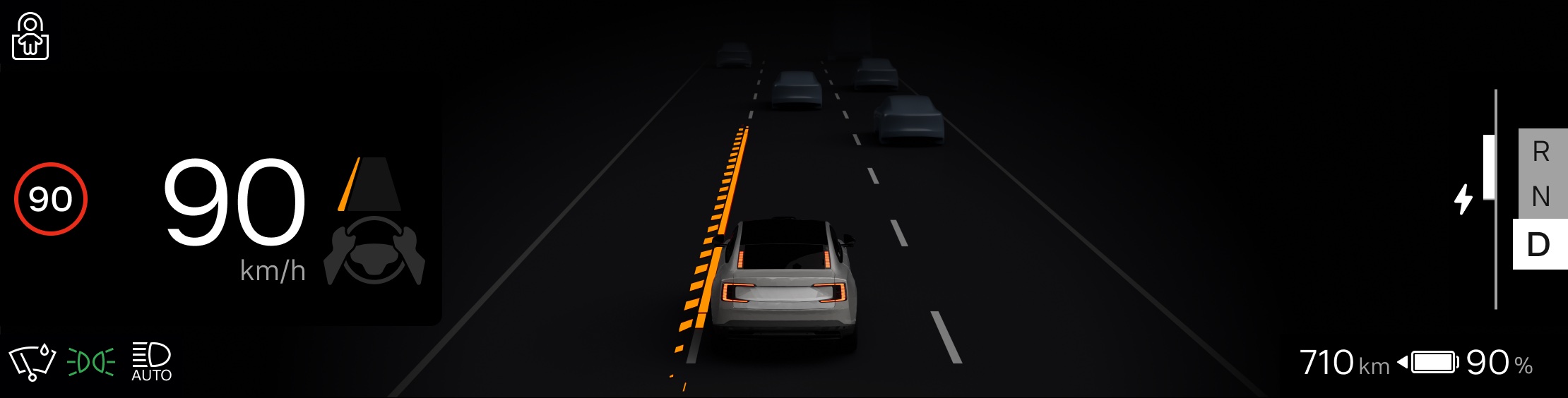
Lane Change Assist on the highway - Test drive, Gothenburg, Sweden
Designing the Future of Driving
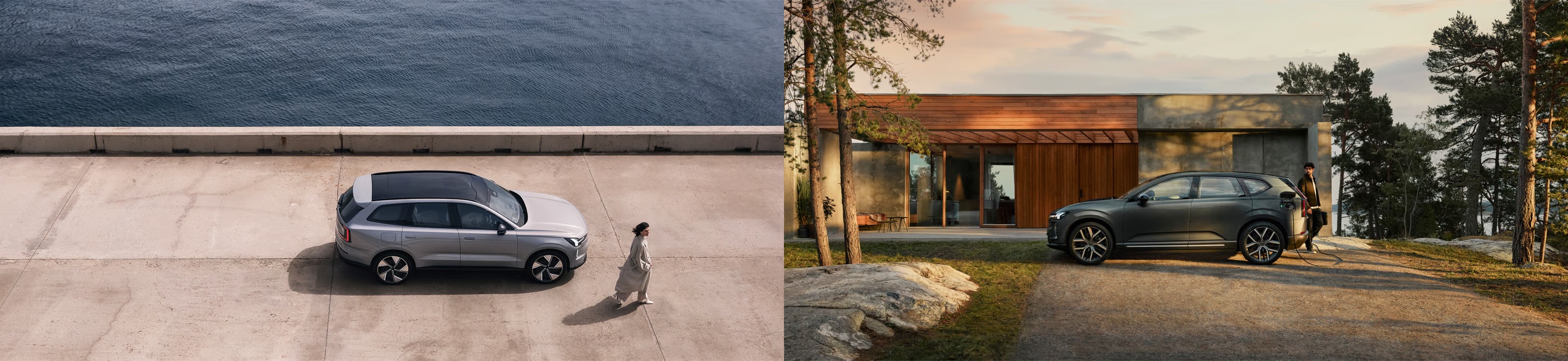
Much of my work at Volvo happened across the SPA2 and SPA3 platforms, including models such as the EX90 and EX60.
Working at this level meant being closely connected to engineering, R&D, research, and the Volvo Cars Safety Centre. Many projects started with a new technical capability and a question: what could this mean for the driving experience?
My role often sat between these two worlds: understanding what the technology could do, exploring what it could mean for the driver, and turning those possibilities into something we could discuss, prototype, and test.
I worked across advanced driver assistance, supervised autonomous driving, proactive safety, and other emerging technologies, considering the driving experience as a whole journey - from parking to parking. This meant looking beyond driving itself to include parking and the many other moments and interactions that shape the experience.
For me, the interesting part wasn't simply designing the interface for new technology. It was figuring out how that technology should become part of the relationship between the driver and the car.
One journey, end to end - autonomy from parking to parking
Supervised Autonomy - L2++
Autonomy doesn't arrive all at once. It is introduced gradually, with the car taking on more responsibility while the driver remains part of the system.
Through our collaboration with engineers, researchers, and safety teams, I explored what this changing relationship could mean for the driving experience. As the car becomes capable of making more decisions, the driver needs to understand what the car can do, what it is doing, and when they need to take responsibility.
One of the projects I worked on was Navi Pilot Assist, Volvo's approach to L2+ assisted driving. The initial focus was highway driving, including automatic lane changes and hands-free driving. As the system became capable of taking on more of the driving, we had to rethink how its decisions, capabilities, and limitations should be communicated.
What is the car doing? What does it understand? What is it about to do? And, most importantly, what does it still need from me?
My role was to explore these states and transitions, making increasingly complex system behavior understandable without exposing the underlying technical complexity or overwhelming the driver.
This meant thinking carefully about who is responsible, when responsibility changes, and how the driver and car can work together. Rather than simply designing individual features, we were designing a new relationship between the driver and the machine.
Designing for Focus
One principle that informed much of my team's work was simple:
The driver's attention belongs on the road.
We therefore became very deliberate about what information we showed and, just as importantly, what information we didn't show. Not every piece of information the car knows needs to become an interaction.
Sometimes the right design decision is to show something. Sometimes it is to wait. Sometimes it is to say nothing at all.
This principle influenced how we approached system states, notifications, alerts, and display experiences. The goal wasn't to make the car more engaging. It was to give the driver the right information at the right moment, while allowing them to stay focused on driving.
Over time, this became an important part of the approach we followed as a team: creating a calm and reassuring environment where the driver could feel informed, protected, and confident without being overwhelmed by the technology.
Three driver display modes: Calm, Map and Surround View - a vision developed by the team
Designing for Glanceable Communication
As the car becomes more capable, one of the design challenges is deciding how and when to communicate what the car knows and is doing.
The driver may only have a moment to glance at the display. Information needs to be clear, short, and easy to understand without taking attention away from the road. This means carefully considering what to show, when to show it, and how to show it.
We explored how different ADAS and assisted-driving systems could communicate their state, intentions, and important changes without turning the driving experience into a constant stream of information.
One of the concepts we developed as a team was the ADAS Bubble - a unified way of bringing the different ADAS and assisted-driving systems together in one place for the driver. The challenge was not simply to show more information, but to create a clear and glanceable overview of what the car was doing and when something required the driver's attention.
For me, this was an important part of designing for assisted driving: making complex system behavior understandable in a fraction of a second, while keeping the driver's attention on the road.
The ADAS Bubble - a centralized indication for assisted driving, developed by our team
From Active to Proactive Safety
One of the ideas that became important in our work was that safety shouldn't only be about what happens when something goes wrong. With increasingly capable sensing and computing, the car can understand more about the environment, the driver, and the situation around them - creating opportunities to help before a situation becomes critical.
This shift from reactive to proactive safety became an important area of exploration for our team.
The design challenge was not simply to make the car react earlier. It was to understand when intervention could genuinely help, what the driver needed to know, and how the system could respond without creating unnecessary distraction or anxiety.
I worked across a range of safety functions, including Lane Keeping Aid, Forward Collision Warning, Blind Spot Information, Automatic Emergency Braking, Automatic Evasive Maneuver, Cross Traffic Alert, Emergency Lane Keeping Aid, and other collision-avoidance experiences.
Lane Keeping Aid in Surround View
Across these systems, we explored different ways for the car to communicate and intervene - through visual, auditory, and haptic feedback - matching the response to the urgency and context of the situation.
For me, the goal of proactive safety was not to make the car constantly intervene. It was to make the right intervention at the right moment, helping the driver before they reach a situation where it is too late to react.
Product video by Volvo Cars, shown here for context. Watch on YouTube
Understanding the Driver
One of our focuses at Volvo was helping drivers when they are not at their best. That means the car needs to be able to understand the driver's state and recognize when they may need support.
Driver Monitoring Systems use cameras and sensors to understand things such as where the driver is looking, their level of attention, and whether they are still able to take control when needed.
I worked on exploring different scenarios and cases for driver monitoring, looking at how the system could recognize different situations and respond in a way that genuinely helps the driver.
This introduced another important design challenge: when should the system intervene?
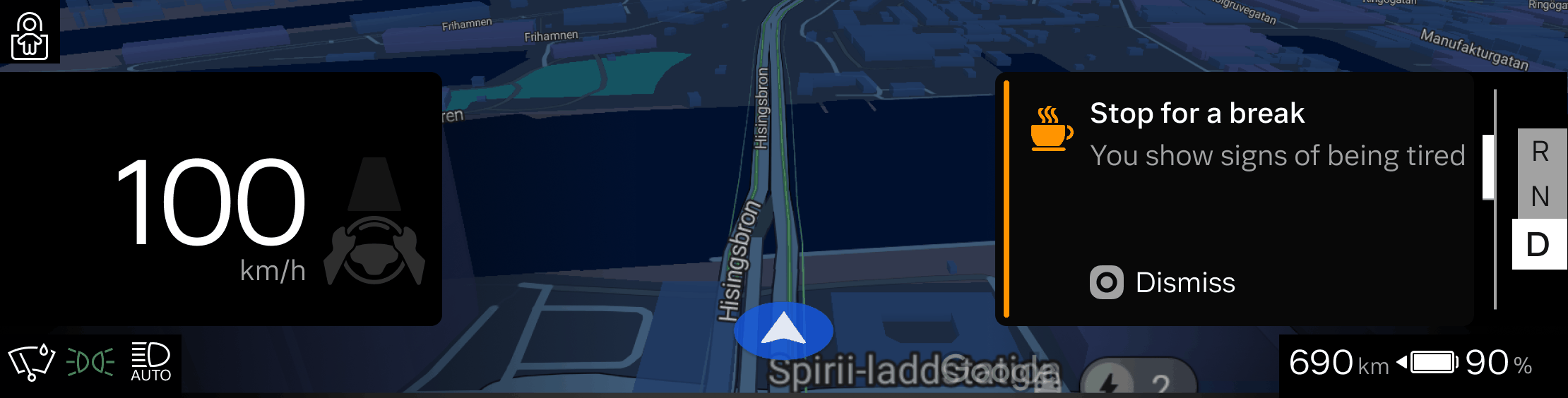
We wanted to avoid making the experience unnecessarily intrusive. At the same time, when the system detects a situation that genuinely requires intervention, it needs to act.
I worked on exploring that balance: when to alert, when to escalate, and when to let the driver take over again.
False positives were particularly important. If the system reacts too often to situations that aren't actually dangerous, drivers can quickly learn to ignore it.
The goal was to make interventions meaningful enough that, when the system does speak up, the driver knows it matters.
Emergency Stop Assist for an inattentive driver - Test drive, Gothenburg, Sweden
Making the Invisible Visible
As the car becomes more capable, it becomes increasingly important for the driver to understand what the system is seeing and doing.
I worked with the team exploring 3D environments and surround-view experiences as a way to make the car's understanding of its surroundings more visible.
One of the challenges was figuring out how to represent complex situations and maneuvers in a way that could be understood quickly.
A 3D representation can show what the system has detected, what it is tracking and how it understands the space around the vehicle. But the goal isn't for the driver to sit there and inspect the visualization.
The driver is looking at this for a moment, while their primary attention needs to remain on the road.
So the question became: what is worth showing in that moment, and how can the visualization help the driver understand the situation without asking them to study it?
This work helped us explore how visualizing the system's understanding could support a clearer mental model of what the car was doing.
Prototyping the Experience
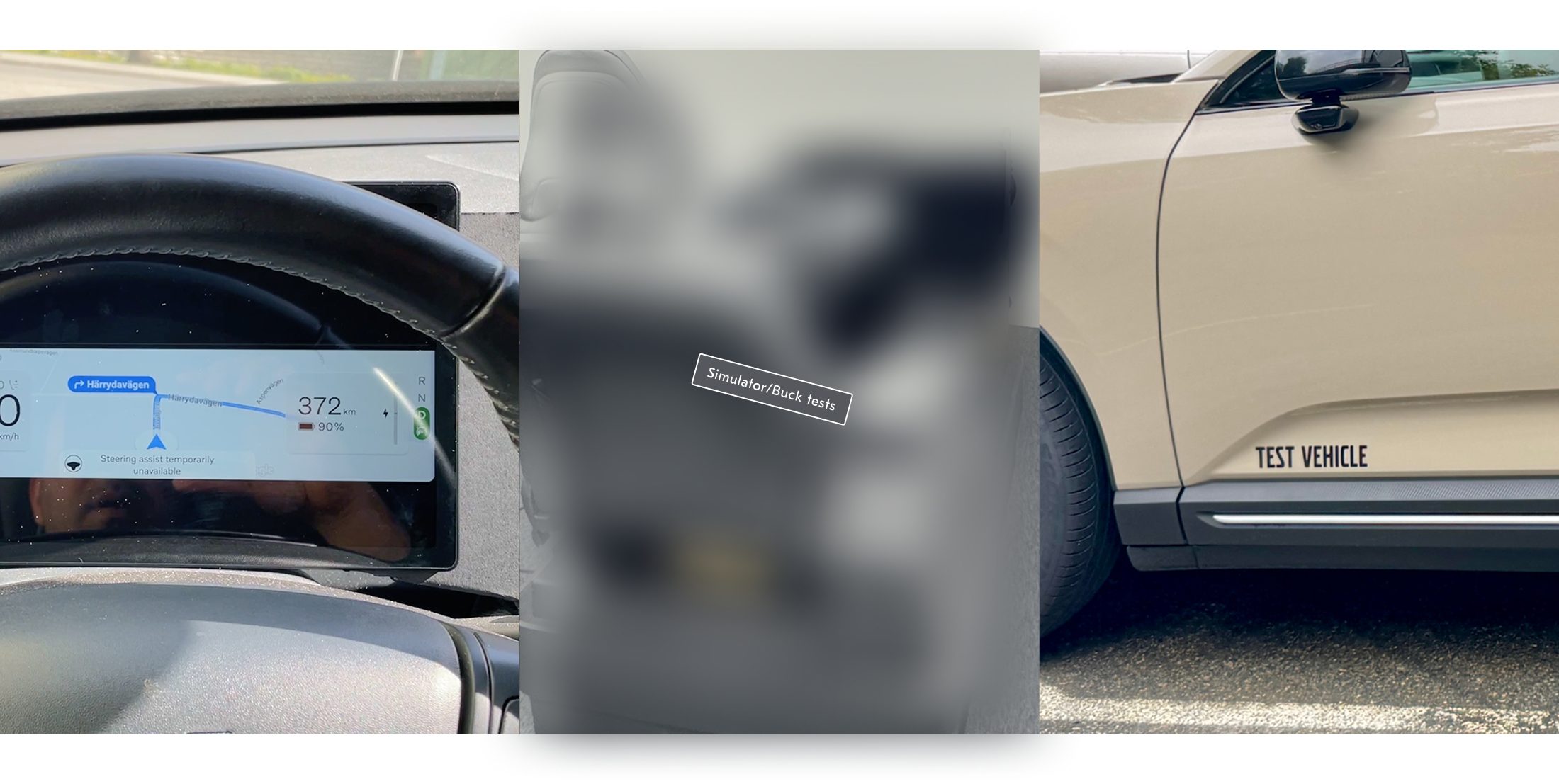
Designing driving experiences meant constantly making things tangible, from quick low-fidelity prototypes and video sketches to more detailed interactive concepts on simulator or test vehicles.
I worked closely with engineers, researchers, and other designers to prototype, test, learn, and iterate. Making something early gave us a way to explore ideas together, challenge assumptions, and understand how an experience might work on the road.
Quick tablet prototypes, simulator and buck rigs, and test vehicles on the road - different levels of testing for the functions and the design
Designing for Moments That Matter
Car design is unlike most of the product design work I've done.
In a digital product, a bad interaction might frustrate someone or make them abandon a task. In a car, you are designing moments that happen at speed, in an unpredictable physical environment, sometimes at the exact moment when someone's safety depends on the system behaving as expected.
That changes how I design.
Decisions need to be challenged, tested and discussed closely with engineers, researchers and safety specialists. Small details can have very different consequences when the product is moving at 100 km/h.
Working on these systems has made me a more careful designer. Not only in how I design interactions, but in how I think about responsibility, trust and the relationship between people and technology.
Product video by Volvo Cars, shown here for context. Watch on YouTube
The Cars I Worked On
I was part of the design work across Volvo Cars' transition to its next generations of electric vehicles and platforms. This included SPA2, Volvo's first dedicated fully electric platform, and the next-generation SPA3 platform, working across programs from their early development.
The work included flagship models such as the EX90 and EX60, as well as other vehicles built on these platforms, including the S60 and other Volvo models.
What I Did
As a Driving Experience Design Lead, I worked across advanced driver assistance and emerging automated driving experiences, helping translate complex technical capabilities into clear and human-centered interactions.
My work included:
AD/ADAS Functions Advanced Driver Assistance and Proactive Safety Navi Pilot Assist: Automatic lane changes and Hands-free driving Collision avoidance Driver Monitoring Systems and Driver Alerts 3D Surround View Head-up display and Augmented Reality display concepts Safety concepts and future driving experiences Cross-functional collaboration with engineering, safety, research and R&D
The work was less about designing individual features in isolation and more about shaping how all these capabilities come together to create a coherent relationship between the driver and the car.
Team
Volvo Cars - Driving Experience Design
Working closely with engineering, R&D, research, and the Volvo Cars Safety Centre.