
Envisioning experiences in the AI era
I've had the opportunity to work with different teams across Google, including Pixel, Workspace, and the Creative Lab, to help envision future products built around AI. Using storytelling, I shaped new product visions that fed into conversations across the company. Some of that work surfaced in experiences people use today.
Bringing intelligence into experiences on the go
How might we bring AI to the Google Pixel experience? Working with the Google AI and Pixel teams, we started with people to explore how intelligence could add value to their everyday lives. The question wasn't what the technology could do. It was what would be worth doing with it.
Scenes from a video I filmed for this project. Under NDA.
Designing for the future is less comfortable than designing for today. It comes with ambiguity, uncertainty, and confusion. Rather than trying to think our way to future scenarios, we built them, using simple tools to prototype ideas quickly enough to react to them.
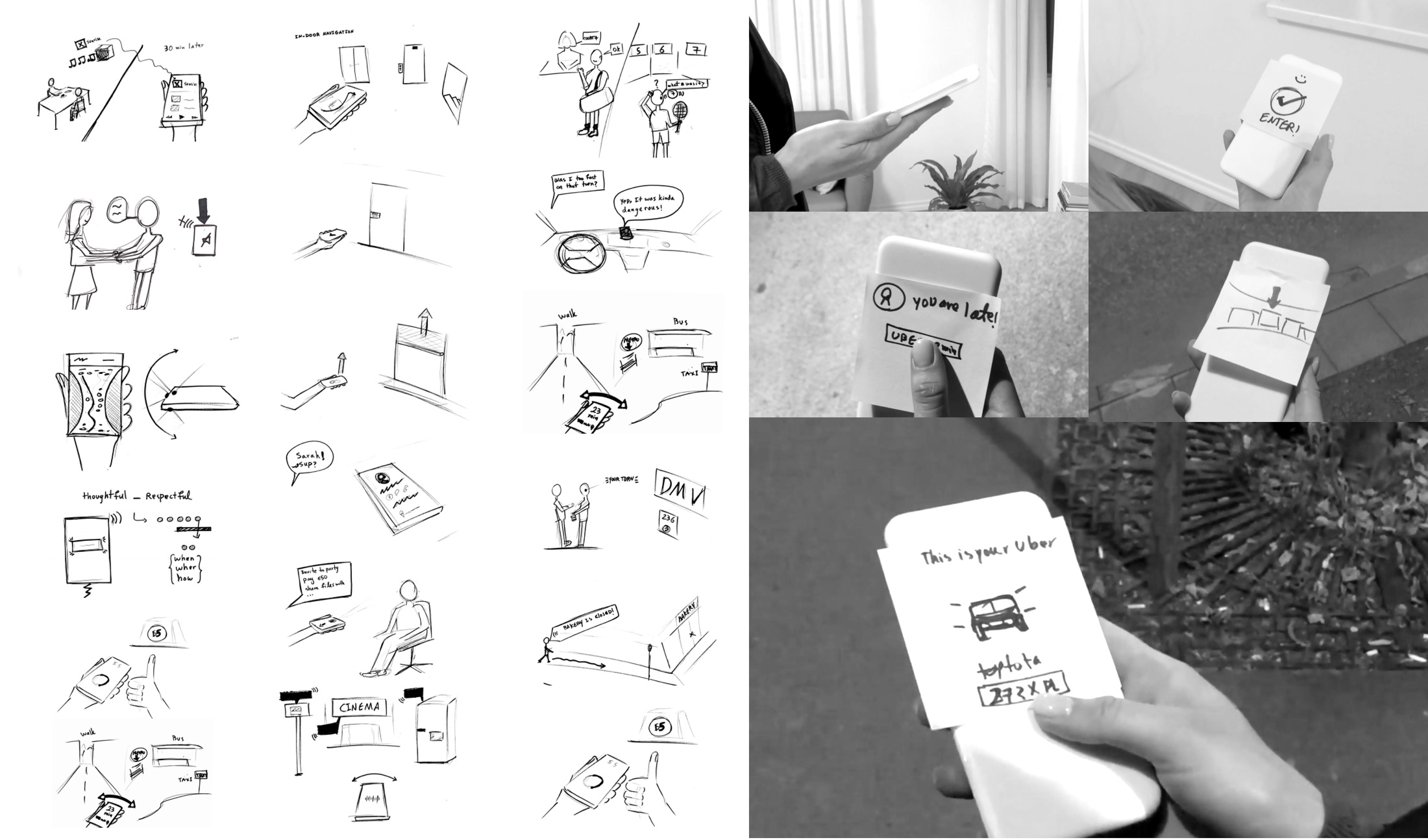
Acting is a powerful ideation tool. When you have to act out an idea, you move past mental blocks and reach solutions you wouldn't find at a desk. There's a subtle, useful pressure in having to perform an idea, and combined with a camera, that pressure leads to surprising results.
Video became more than a way to communicate the work. Unlike film production, the process of shooting and editing stayed iterative, which made it a way to think, ideate, and define the experience itself.
Bringing AI into everyday work
We started by asking how intelligence could enhance the tools people already use every day, Gmail, Docs, Calendar, Meet, and others. But the more interesting question sat beyond the existing products: what if work wasn't a set of tools at all, but something you did alongside an intelligence? That shift changes more than the interface. It changes how people behave.
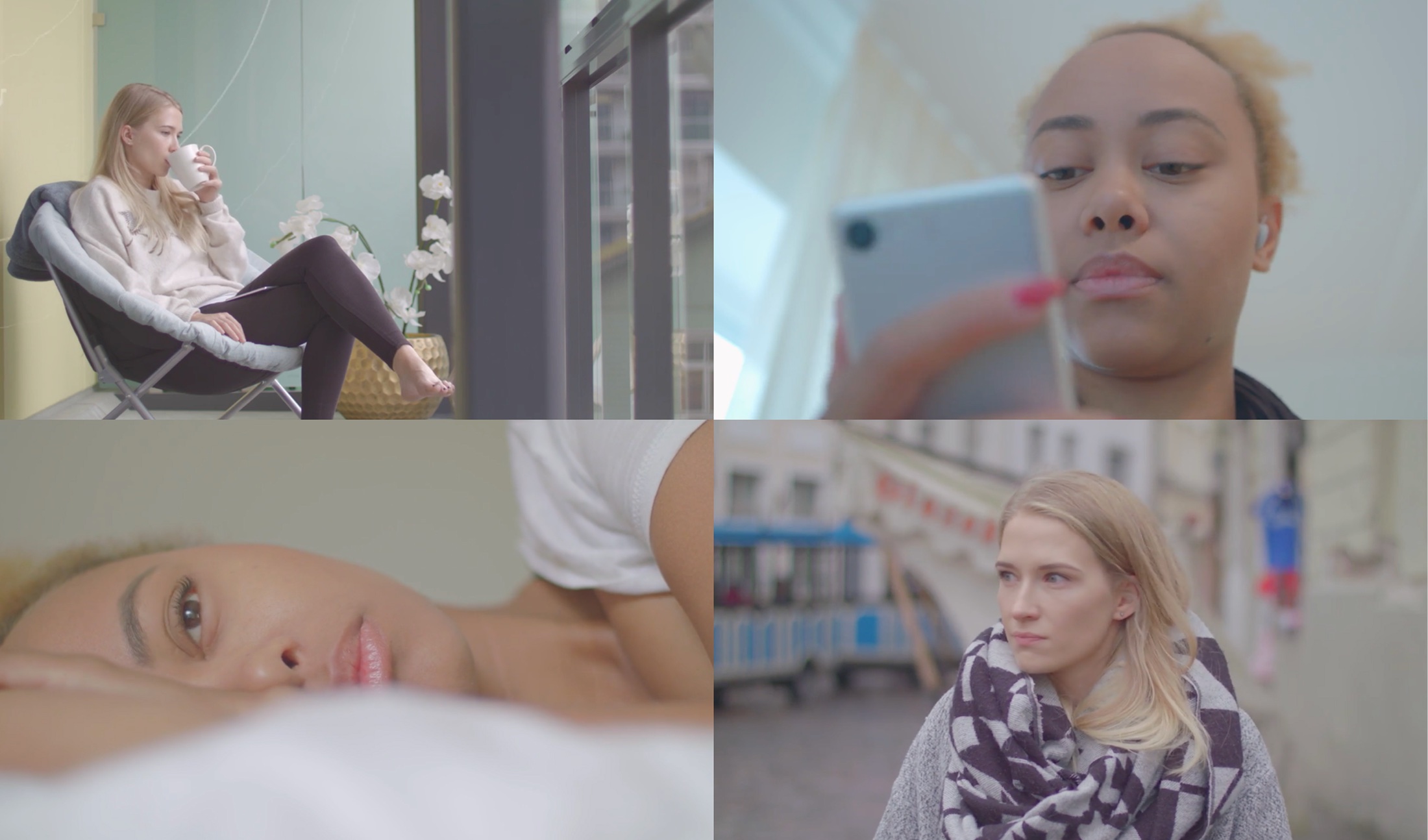
Scenes from one of the video stories I created for the Workspace team. Under NDA.
We focused on Gen Z, the early adopters and the future of the workforce. Working with a research team at Google, we looked at what this generation actually values when it comes to work and what they expect from it. Those values became the frame for everything we explored, keeping the ideas anchored in what people want rather than what the technology made possible.

Our vision stories and experiences came together around four questions.
How might we expand the work environment beyond tools and places?
How might we enhance digital wellbeing at work?
How might we encourage Gen Z to express creativity?
How might we help people use their time more efficiently?
Adding intelligence to a tool people already trust
This project explored bringing AI into a widely used utility tool, one people rely on for quick, exact answers. The obvious move would have been to bolt a chatbot onto it. We wanted something better than that.
The real question was how to make an existing product more intelligent without replacing what already worked. Intelligence had to earn its place by adding something people actually needed, explanation, understanding, the ability to learn from what they were doing, rather than simply being present because the technology existed. We explored many directions and developed a vision for what the product could become.
This is a tool where a wrong answer is worthless, so the challenge wasn't generating a result. It was making sure people understood how they got there, and could tell when something looked off.
That reframed the design problem entirely. Intelligence here wasn't about producing answers faster. It was about making the reasoning visible enough that people stayed in control of it, and could catch a hallucination before it became a mistake.
I was brought in as a consultant embedded in the team, leading discovery and ideation, then carrying the work through filming and production. Depending on the project, the end result was either a video scenario or a set of final screens.
The concept videos were shared internally across Google and helped shape the vision for products and features that teams went on to build. Many of those ideas can be seen today as real features across Google products.
Tim Wantland and other members across Workspace, Pixel, and the Creative Lab.
Under NDA